
How Music, Theatre, and Dance Education Give Charlotte Students a Real Admissions Edge
When parents think about preparing their child for college admissions, the usual checklist comes to mind: strong GPA, SAT scores, AP classes, community service. But there’s one category that consistently catches the eye of admissions officers, and it’s one that many families overlook or undervalue: the performing arts.
Charlotte Academy of Music alum, Caryn King, recently wrote to her former voice teacher, Angela Renee Simpson, with gratitude to Angela for the training she received preparing for her college auditions. That preparation helped Caryn earn acceptance to her dream school, The Frost School of Music at the University of Miami where she is majoring in Music Education. Caryn wrote:
Hello Ms. Simpson,
As I finish my first year at the Frost School of Music in Miami, I find myself thinking about you and how grateful I am for your help with my auditions. Without you and your amazing work, I wouldn’t be where I am, and I am eternally grateful. You are a beautiful soul, and though we only worked with each other for a small amount of time, you will always have a place in my mind and body when I perform. Your teachings of expression have been especially helpful as I have found my voice in more solo repertoire. I hope that you have had an amazing year.
Thank you for being such a light in the world and for sharing your magic with me.
Warmly,
Caryn King
Whether your child is acting in a musical production, singing in a choir, preparing for a dance recital, or performing with their school orchestra, their time on stage is doing far more than building memories. It’s building a college application. And for students in the Matthews and Charlotte, NC area, programs like those at CAM are giving kids exactly that edge. And the research backs this up.
A landmark study funded by the National Endowment for the Arts “Arts Education as a Pathway to College” by University of Maryland researcher Kenneth Elpus, examined a nationally representative sample of 16,400 American students and found striking results. After controlling for demographic and academic differences between arts and non-arts students, the findings were clear:
- Arts students were 29% more likely to apply to a postsecondary institution than non-arts students.
- Arts students were 21% more likely to be enrolled in a postsecondary institution two years after high school graduation.
- Music students were 20% more likely to pursue postsecondary study than non-music peers.
Why College Admissions Officers Pay Attention
Selective colleges aren’t just looking for academically strong students. They’re curating a class; a community of people who will bring energy, creativity, and perspective to campus life. Students with a background in theater, dance, and music fit that vision in a very specific way. According to a 2023 study by the National Association for College Admission Counseling (NACAC), nearly 44% of college admissions officers consider extracurricular activities “moderately to considerably important” in evaluating applicants, especially at selective schools. Students with sustained involvement in the performing arts stand out for a few key reasons:
- They demonstrate commitment. Rehearsals, performances, auditions, and concerts require consistent effort over many years, not a résumé checkbox added junior year.
- They show up under pressure. Performing live in front of an audience is one of the most visceral demonstrations of composure and preparation a teenager can show.
- They collaborate differently. Theater ensembles, drama productions, and choir or band performances require deep interdependence, something that reads clearly in interviews and essays.
James Fisher, a former Senior Assistant Director of Admissions at the University of Southern California, puts it plainly: extracurriculars help admissions officers understand the “qualitative skills” students bring to campus, things like “leadership, communication, empathy, organization, teamwork, and time management.” Theater, drama, and music, perhaps more than any other activities, develop all six.
Julie Sams, Director of Admissions at Transylvania University, captures the broader philosophy well. “Holistic review means we take time to really understand the student behind the transcript. We look at where a student has been, what they’ve accomplished and how they’ve grown, because success in college is about momentum, not perfection.”
A student who has trained in theater, dance, or music at dedicated performing arts programs like those at Charlotte Academy of Music has exactly the kind of growth narrative Sams is describing.
The Personal Essay Goldmine
If there is one part of the college application where performing arts students have an undeniable advantage, it’s the personal essay. The Common App personal essay prompt asks students to share a story that reflects their identity, growth, or values. For students with a background in theater, dance, or music, the material practically writes itself, but more importantly, it tends to be authentic, which is exactly what admissions readers are scanning for. Consider the range of essay angles a performing arts student can draw from:
The Failure Story
A missed cue, a forgotten line, a cracked note during a concert… these moments of very public imperfection become powerful essays about resilience, humility, and learning to recover gracefully. Admissions officers read thousands of essays about sports injuries and test anxiety. An essay about freezing during a solo performance or blanking on stage and what happened next is genuinely compelling.
The Identity Story
Theater and music often intersect with a student’s sense of self in profound ways, discovering their voice through a dramatic role, finding community backstage, or connecting with their heritage through song. These essays feel personal and specific in ways that generic achievement essays rarely do.
The Transformation Story
Many students come to drama and music programs as shy, uncertain, or searching. The arc from audition nerves to leading a cast, or from beginner musician to section leader, maps beautifully onto the kind of growth narrative colleges want to read.
Beyond the Essay: Where It Shows Up
The performing arts advantage doesn’t stop at the personal essay. It threads through the entire application. Performing arts naturally generates multiple entries on the Common App activities list — productions, private lessons – each one reinforcing the story of a student with genuine, sustained passion rather than scattered résumé-padding. Add in a recommendation letter from a long-time drama director or music teacher (who often knows a student more deeply than a classroom teacher), and the application starts to feel like a complete, compelling portrait of a person.
The advantages carry into interviews, too. Students who perform are practiced at communicating under pressure. They make eye contact, pace their words, and carry themselves with the kind of confidence that only comes from years on stage. And for students with significant training, many colleges offer arts supplements such as audition recordings, portfolios, or performance résumés that can unlock additional scholarship opportunities and open doors at schools ranging from conservatories to liberal arts colleges with strong theater and music programs.
Founder and Owner of Charlotte Academy of Music, Regina Ziliani, writes “Over the years, I’ve written more than 100 college application letters of recommendation for our students. Many have gone on to pursue music or theatre in college—but what’s just as meaningful is how often students on entirely different paths have earned college admittance and scholarships because of their performing arts experience. The training they received here has a way of staying with them, opening doors many never anticipated.”
The Music-Medical School Connection
Physician and biologist Lewis Thomas studied the undergraduate majors of medical school applicants and found that music majors have a 66% medical school acceptance rate — compared to the next highest group, biochemistry majors, at 44%. That means music majors are accepted to medical school at a rate nearly 50% higher than the most traditional pre-med major. Thomas found that 66% of music majors who applied to medical school were admitted — the highest percentage of any group studied. Why? Researchers point to the same skills your students are building every day: medical students with humanities and arts backgrounds performed better in communication and interpersonal skills tests than those with natural science backgrounds, suggesting these individuals may be better at interacting with patients.
The “Spike” Advantage
College admissions consultants often talk about the concept of a “spike” — a single area of profound depth and commitment that makes a student’s profile memorable and distinct. In an applicant pool full of well-rounded students, the student with a genuine spike often stands out. Theater, dance, and music are among the clearest paths to a spike. A student who has trained seriously in drama for years, performed in multiple productions, and taken on leadership roles in their program has a story that no one else in the applicant pool has. That uniqueness matters.
Even students who aren’t aiming for arts-focused careers or majors benefit from this. The University of Maryland research found that arts students pursued STEM majors at rates equal to their non-arts peers — meaning a young scientist or engineer who also spent four years in the school theater or orchestra tells a more interesting story without sacrificing any academic credibility.
How Charlotte Academy of Music Prepares Students for College
At Charlotte Academy of the Arts in Matthews, NC, we don’t just teach students to perform, we intentionally build the kind of experiences that translate directly into strong college applications and auditions. Here’s how:
Nationally Recognized Competitions and Festivals
Participation in prestigious events like the Junior Theatre Festival and the National Federation of Music Clubs (NFMC) Festival gives Charlotte Academy of Music students something most applicants simply don’t have: nationally recognized credentials in their art form. These aren’t local accolades — they’re the kind of resume entries that signal to admissions officers that a student has been evaluated and recognized on a broader stage. For a student writing a college application, that distinction matters enormously.
College Audition Preparation
At the Academy you will find multiple opportunities to prepare for auditions and performances. This June we are hosting a College Audition Prep Intensive led by Angela Renee Simpson. The Intensive will be held on Sunday, June 14, 2026, 1–5:30 PM. Students will get expert help with prescreens, live auditions, repertoire, and college app timelines so they walk into auditions confident and prepared.
Real Leadership Roles
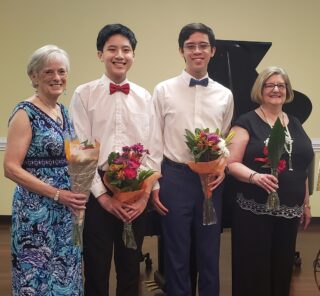
One of the most powerful things a high school student can put on a college application is genuine, earned leadership. At CAA, students don’t just participate — they lead. Our high school students have the opportunity to serve as Summer Camp Counselors, mentoring younger students and developing the kind of supervisory responsibility that colleges associate with maturity and character. Within our SHINE Musical Theatre program, students can step into roles as Dance Captains, Stage Managers, and even Student Directors — titles that carry real weight on a Common App activities list and give students rich material for essays and interviews.
Senior Recitals
For our graduating students, the Senior Recital is both a capstone and a credential. Preparing and presenting a full recital requires months of discipline, self-direction, and artistic development — and it demonstrates a level of commitment and mastery that few high school students can claim. For students applying to colleges with arts supplements or audition components, the Senior Recital is also invaluable preparation. And for any student writing about their artistic journey in a personal essay, it’s a powerful centerpiece.
Together, these experiences don’t just look good on paper — they shape students who are genuinely ready for the demands of college and beyond.
What Parents Can Do Now
If your child is involved in theater, music, and/or dance, here’s how to help them translate that experience into the strongest possible application:
- Document everything. Keep a running record of performances, classes, workshops, master classes, roles, awards, intensives, hours of training, and leadership positions. Many students forget or underestimate how much they’ve done by the time they sit down to fill out their college applications.
- Encourage reflection early. Ask your child what they’ve learned from their arts experience — not just what they’ve done. The student who can articulate how the performing arts have changed them is the one who writes a great essay.
- Don’t minimize it. Parents sometimes worry that arts involvement looks “soft” compared to STEM activities. The research says otherwise. There is no arts penalty — and involvement in drama, theater, and music is increasingly recognized as a marker of creativity, discipline, and emotional intelligence.
- Seek professional guidance from arts educators. Your child’s music, dance, and theatre teachers will be able to guide you through college audition preparation. Private lessons are an ideal way to plan and prepare a college audition program that highlights the student’s strengths, follows each university’s audition requirements, and best showcases the student’s years of training.
- Look for audition opportunities. If your child has genuine talent and aspiration, research schools with strong performing arts programs and find out early whether an audition or portfolio supplement is available. Some programs have separate deadlines.
- Talk to teachers and directors. The adults who know your child on stage are often the best source of recommendation letters and can speak to qualities that classroom performance alone doesn’t reveal.
The Bottom Line
Research consistently shows that arts students are more likely to apply to college, more likely to enroll, and no less likely to gain admission to selective institutions than their peers. For families in our area, Charlotte Academy of the Arts offers students the kind of deep, sustained performing arts training that shows up powerfully in college applications, in essays, activity lists, recommendation letters, and interviews. From nationally recognized festival participation and Senior Recitals to real leadership roles as Student Directors, Stage Managers, and Camp Counselors, CAA students graduate with a story worth telling. When admissions officers read an application from a student whose love of the performing arts through every part of their file, they aren’t just reading credentials. They’re meeting a person. And that is precisely what a great college application is supposed to do.
Enjoy this video of Charlotte Academy of Music alum, Caryn King, now a student at her dream school, the Frost School of Music. Caryn studied voice with Angela Renee Simpson at CAM.
Sources
- Elpus, K. Arts Education as a Pathway to College. University of Maryland / National Endowment for the Arts Research: Art Works Program. arts.gov
- National Association for College Admission Counseling (NACAC). State of College Admission Report, 2023.
- Fisher, J. (former Senior Assistant Director of Admissions, University of Southern California). Quoted in U.S. News & World Report.
- Sams, J. (Director of Admissions, Transylvania University). Quoted in Transylvania University Admissions Blog, January 2026.